

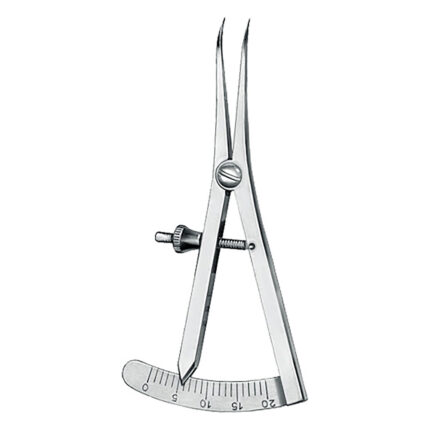

Caliper, Castroviejo-Epker (0-40 mm)
Caliper, Castroviejo-Epker (0-40 mm)
- Material Type: High-quality surgical stainless steel for durability, corrosion resistance, and longevity in clinical settings
- Design:
- Straight Design: Optimized for precise measurements of anatomical structures, ideal for both straight and slightly curved applications
- Measurement Range: 0 to 40 mm, allowing for versatile measurements across a variety of surgical contexts
- Features:
- Precision Tips: Sharp, tapered tips designed for accurate placement and measurement on tissue
- Graduations: Clear, easy-to-read markings for precise measurements, ensuring high accuracy in clinical use
- Length: Standard length (typically around 15–20 cm) for effective handling and maneuverability during procedures
- Ergonomics: Designed with an ergonomic handle for a comfortable grip, enhancing control and reducing hand fatigue
- Weight: Lightweight construction to facilitate ease of handling and prolonged use
- Care Instructions: Autoclavable; specifically designed for easy cleaning and sterilization in clinical environments
If you need further details or adjustments, just let me know!
Reviews (0)
Shipping & Delivery
Related products

Cotton swab forceps , forceps, acc. to Foerster, serrated, straight
Straight Cotton Swab Forceps
- Material:
- High-quality stainless steel for durability and corrosion resistance
- Design:
- Straight tips for easy access and manipulation
- Serrated jaws to provide a secure grip on cotton swabs or gauze
- Function:
- Ideal for handling cotton swabs, applying antiseptics, or manipulating soft tissue during procedures
- Length:
- Typically ranges from 10 cm to 15 cm
- Finish:
- Smooth or satin finish to minimize tissue adherence and enhance handling
Serrated Straight Forceps
- Material:
- Stainless steel, designed for strength and long-term use
- Design:
- Straight configuration with serrated jaws for secure grasping of various materials
- Function:
- Used for grasping, holding, or manipulating tissue and other materials in surgical procedures
- Length:
- Generally around 12 cm to 20 cm
- Finish:
- Polished or satin finish for improved visibility and ease of handling

Trocars, suction tubes, Cannulas , Tube connector, Luer-Lock, female
Trocars
- Material: Typically constructed from stainless steel for durability and corrosion resistance.
- Design:
- Features a sharp, pointed tip for easy tissue penetration.
- Hollow shaft allows for the passage of other instruments or fluids.
- Function:
- Used in minimally invasive surgeries (e.g., laparoscopy) to create access points for surgical instruments.
- Sizes: Available in various diameters to accommodate different surgical applications.
Suction Tubes
- Material: Usually made from medical-grade plastic or stainless steel.
- Design:
- Can be flexible or rigid, with varying lengths and diameters.
- Often features openings along the sides or at the tip for effective suctioning.
- Function:
- Designed to remove fluids, debris, or gases from surgical sites or body cavities.
- Applications: Commonly used in surgical procedures, wound care, and emergency medicine.
Cannulas
- Material: Often made from stainless steel or high-quality plastic.
- Design:
- Hollow tubes designed for insertion into the body.
- May include a removable inner stylet for easier insertion.
- Function:
- Used for delivering fluids, medications, or draining fluids from the body.
- Applicable in various medical procedures, including intravenous (IV) therapy and airway management.
Female Luer-Lock Tube Connector
- Material: Typically made from medical-grade plastic.
- Design:
- Features a female Luer-Lock fitting for secure connection to Luer-tipped devices or syringes.
- Ensures a leak-proof connection, preventing backflow and contamination.
- Function:
- Used to connect two tubes or medical devices, facilitating fluid transfer in a controlled manner.
- Applications: Commonly employed in various medical and surgical settings where secure connections are required, such as in IV therapy or suction systems.


Cotton swab forceps , forceps, acc. to Foerster, serrated, curved
Curved Cotton Swab Forceps
- Material:
- High-quality stainless steel for durability and corrosion resistance
- Design:
- Curved tips for enhanced visibility and access in confined spaces
- Serrated jaws to ensure a secure grip on cotton swabs or gauze
- Function:
- Ideal for handling cotton swabs, applying antiseptics, or manipulating soft tissue during various procedures
- Length:
- Typically ranges from 15 cm to 20 cm
- Finish:
- Smooth or satin finish to minimize tissue adherence and improve handling
Serrated Curved Forceps
- Material:
- Stainless steel, designed for strength and longevity
- Design:
- Curved configuration to facilitate access to deeper or more confined areas
- Serrated jaws for secure grasping of tissues and other materials
- Function:
- Used for grasping, holding, or manipulating tissue in surgical procedures
- Length:
- Generally around 15 cm to 25 cm
- Finish:
- Polished or satin finish for enhanced visibility and handling

Trocars, suction tubes, Cannulas , Wound and Bladdersyringe, glas barrel, acc. to Janet
Trocars
- Material: Typically made of stainless steel for durability and corrosion resistance.
- Design:
- Sharp-pointed end for puncturing tissue.
- Often features a hollow shaft for the insertion of additional instruments or drainage.
- Function:
- Used in procedures such as laparoscopic surgeries to create an access point for other instruments.
- Sizes: Available in various diameters depending on the procedure.
Suction Tubes
- Material: Commonly made from medical-grade plastic or stainless steel.
- Design:
- Flexible or rigid tubes that can vary in length and diameter.
- Often equipped with openings along the sides or at the tip for effective suctioning.
- Function:
- Used to remove fluids, debris, or gases from surgical sites or body cavities.
- Application: Essential in surgeries, wound care, and in emergency medicine.
Cannulas
- Material: Usually constructed from stainless steel or high-quality plastic.
- Design:
- Hollow tubes designed for insertion into the body.
- May come with a removable inner stylet for easy insertion.
- Function:
- Used to deliver fluids, medications, or to drain fluids from the body.
- Can be used in various procedures, including IV therapy and airway management.
Wound and Bladder Syringe (Glass Barrel)
- Material:
- Glass barrel for ease of cleaning and sterilization.
- Rubber or plastic plunger for smooth operation.
- Design:
- Typically features a graduated scale for accurate measurement.
- Can have a variety of tips for different applications (e.g., curved tip for wound irrigation).
- Function:
- Used for irrigating wounds, drawing fluids, or administering medications into the bladder.
- Capacity: Available in various sizes, commonly from 30 mL to 60 mL.


Trocars, suction tubes, Cannulas , Vessel irrigation cannula
Trocars
- Material: Typically made from stainless steel for durability and resistance to corrosion.
- Design:
- Sharp-pointed tip for penetrating tissue.
- Hollow shaft to allow the passage of other instruments or drainage.
- Function:
- Used to create access points in minimally invasive surgeries (e.g., laparoscopy) for the insertion of instruments.
- Sizes: Available in various diameters to suit different surgical needs.
Suction Tubes
- Material: Usually made from medical-grade plastic or stainless steel.
- Design:
- Flexible or rigid tubes with varying lengths and diameters.
- Openings along the sides or at the tip for effective suctioning.
- Function:
- Designed to remove fluids, debris, or gases from surgical sites or body cavities.
- Application: Commonly used in surgeries, wound care, and emergency medicine.
Cannulas
- Material: Often constructed from stainless steel or high-quality plastic.
- Design:
- Hollow tubes designed for insertion into the body, sometimes with a removable inner stylet for easier insertion.
- Function:
- Used for delivering fluids, medications, or draining fluids from the body.
- Applicable in various medical procedures, including intravenous (IV) therapy and airway management.
Vessel Irrigation Cannula
- Material: Typically made from medical-grade plastic or stainless steel.
- Design:
- Specialized cannula with a wider lumen and multiple side openings to facilitate irrigation.
- Often curved or angled for better access to vessels.
- Function:
- Used to irrigate blood vessels during surgical procedures to clear debris and maintain patency.
- Application: Essential in vascular surgeries and procedures requiring meticulous irrigation of vessels.

Trocars, suction tubes, Cannulas , Valvular suction tube
Trocars
- Material: Generally made from stainless steel, ensuring durability and resistance to corrosion.
- Design:
- Features a sharp, pointed tip for penetrating tissues.
- Hollow shaft allows for the passage of other instruments or drainage.
- Function:
- Primarily used in minimally invasive surgeries (e.g., laparoscopy) to create access points for surgical instruments.
- Sizes: Available in various diameters to suit different surgical needs.
Suction Tubes
- Material: Usually constructed from medical-grade plastic or stainless steel.
- Design:
- Can be flexible or rigid, with varying lengths and diameters.
- Often includes openings along the sides or at the tip for effective suctioning.
- Function:
- Used to remove fluids, debris, or gases from surgical sites or body cavities.
- Applications: Commonly used in surgeries, wound care, and emergency medicine.
Cannulas
- Material: Typically made from stainless steel or high-quality plastic.
- Design:
- Hollow tubes designed for insertion into the body.
- May have a removable inner stylet for ease of insertion.
- Function:
- Used for administering fluids, medications, or draining fluids from the body.
- Applicable in various medical procedures, including intravenous (IV) therapy and airway management.
Valvular Suction Tube
- Material: Often made from medical-grade plastic or stainless steel.
- Design:
- Features a one-way valve mechanism to prevent backflow of fluids.
- Typically includes a soft, flexible tip for safe suctioning.
- Function:
- Designed to efficiently remove fluids while preventing contamination or re-entry of fluids into the suction source.
- Applications: Commonly used in surgical procedures, especially in delicate areas where controlling fluid dynamics is critical.
Reviews
There are no reviews yet.