
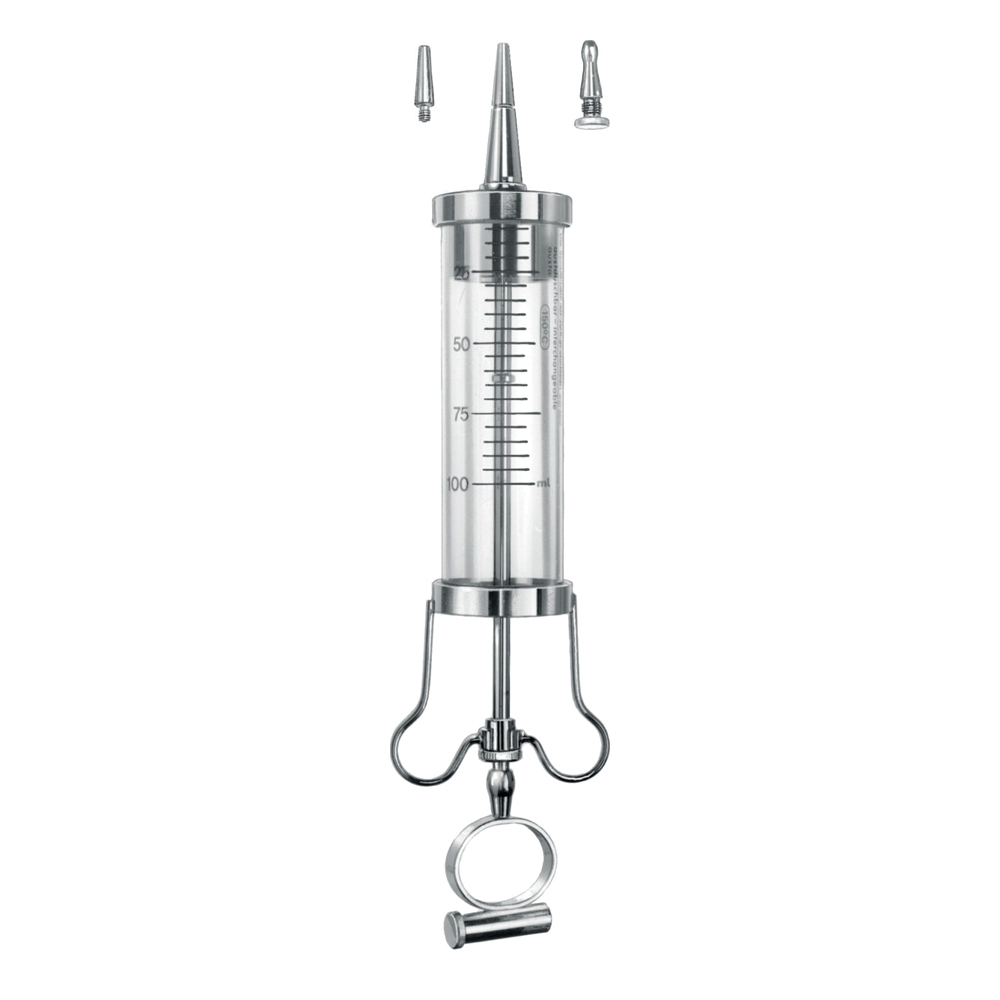


Trocars, suction tubes, Cannulas , Wound and Bladdersyringe, glas barrel, acc. to Janet
Trocars
- Material: Typically made of stainless steel for durability and corrosion resistance.
- Design:
- Sharp-pointed end for puncturing tissue.
- Often features a hollow shaft for the insertion of additional instruments or drainage.
- Function:
- Used in procedures such as laparoscopic surgeries to create an access point for other instruments.
- Sizes: Available in various diameters depending on the procedure.
Suction Tubes
- Material: Commonly made from medical-grade plastic or stainless steel.
- Design:
- Flexible or rigid tubes that can vary in length and diameter.
- Often equipped with openings along the sides or at the tip for effective suctioning.
- Function:
- Used to remove fluids, debris, or gases from surgical sites or body cavities.
- Application: Essential in surgeries, wound care, and in emergency medicine.
Cannulas
- Material: Usually constructed from stainless steel or high-quality plastic.
- Design:
- Hollow tubes designed for insertion into the body.
- May come with a removable inner stylet for easy insertion.
- Function:
- Used to deliver fluids, medications, or to drain fluids from the body.
- Can be used in various procedures, including IV therapy and airway management.
Wound and Bladder Syringe (Glass Barrel)
- Material:
- Glass barrel for ease of cleaning and sterilization.
- Rubber or plastic plunger for smooth operation.
- Design:
- Typically features a graduated scale for accurate measurement.
- Can have a variety of tips for different applications (e.g., curved tip for wound irrigation).
- Function:
- Used for irrigating wounds, drawing fluids, or administering medications into the bladder.
- Capacity: Available in various sizes, commonly from 30 mL to 60 mL.
These instruments are essential in surgical and clinical settings, providing functionality and precision in various medical procedures. If you need more specific details or further context, feel free to ask!
Reviews (0)
Shipping & Delivery
Related products

Cotton swab forceps , Tampon forceps, acc. to Cheron, bayonet-shape
Bayonet-Shaped Cotton Swab Forceps
- Material:
- High-quality stainless steel for durability and resistance to corrosion
- Design:
- Bayonet shape allows for improved visibility and access in confined spaces
- Serrated jaws provide a secure grip on cotton swabs or gauze
- Function:
- Ideal for handling cotton swabs, applying antiseptics, or manipulating soft tissue in hard-to-reach areas
- Length:
- Typically ranges from 15 cm to 20 cm
- Finish:
- Smooth or satin finish to minimize tissue adherence and enhance handling
Bayonet-Shaped Tampon Forceps
- Material:
- Stainless steel, ensuring strength and resistance to sterilization processes
- Design:
- Bayonet shape for enhanced maneuverability in deeper or restricted areas
- Locking mechanism for secure closure when holding tampons or dressings
- Function:
- Primarily used for applying and securing tampons or dressings during surgical procedures
- Length:
- Generally around 15 cm to 25 cm
- Finish:
- Polished or satin finish for better visibility and ease of handling

Trocars, suction tubes, Cannulas , Urethral olive, Luer-Lock, female
Trocars
- Material: Typically made from stainless steel for durability and corrosion resistance.
- Design:
- Sharp, pointed tip for penetrating tissues.
- Hollow shaft allows for the passage of other instruments or drainage.
- Function:
- Used in minimally invasive surgeries (e.g., laparoscopy) to create access points for surgical instruments.
- Sizes: Available in various diameters to accommodate different surgical procedures.
Suction Tubes
- Material: Usually made from medical-grade plastic or stainless steel.
- Design:
- Flexible or rigid tubes with varying lengths and diameters.
- Often has openings along the sides or at the tip for effective suctioning.
- Function:
- Designed to remove fluids, debris, or gases from surgical sites or body cavities.
- Applications: Commonly used in surgical procedures, wound care, and emergency medicine.
Cannulas
- Material: Typically made from stainless steel or high-quality plastic.
- Design:
- Hollow tubes designed for insertion into the body.
- May feature a removable inner stylet for easier insertion.
- Function:
- Used for delivering fluids, medications, or draining fluids from the body.
- Applicable in various medical procedures, including intravenous (IV) therapy and airway management.
Female Urethral Olive with Luer-Lock
- Material: Usually made from medical-grade plastic.
- Design:
- Features a rounded, olive-shaped tip designed to facilitate smooth insertion and minimize trauma to the urethra.
- Includes a Luer-Lock connector for secure attachment to syringes or other devices.
- Function:
- Used in urological procedures for irrigation, catheterization, or medication administration.
- The olive shape helps to anchor the cannula in place, reducing the risk of displacement during use.
- Applications: Commonly used in urology and gynecology for various diagnostic and therapeutic procedures.


Trocars, suction tubes, Cannulas , Valvular suction tube
Trocars
- Material: Generally made from stainless steel, ensuring durability and resistance to corrosion.
- Design:
- Features a sharp, pointed tip for penetrating tissues.
- Hollow shaft allows for the passage of other instruments or drainage.
- Function:
- Primarily used in minimally invasive surgeries (e.g., laparoscopy) to create access points for surgical instruments.
- Sizes: Available in various diameters to suit different surgical needs.
Suction Tubes
- Material: Usually constructed from medical-grade plastic or stainless steel.
- Design:
- Can be flexible or rigid, with varying lengths and diameters.
- Often includes openings along the sides or at the tip for effective suctioning.
- Function:
- Used to remove fluids, debris, or gases from surgical sites or body cavities.
- Applications: Commonly used in surgeries, wound care, and emergency medicine.
Cannulas
- Material: Typically made from stainless steel or high-quality plastic.
- Design:
- Hollow tubes designed for insertion into the body.
- May have a removable inner stylet for ease of insertion.
- Function:
- Used for administering fluids, medications, or draining fluids from the body.
- Applicable in various medical procedures, including intravenous (IV) therapy and airway management.
Valvular Suction Tube
- Material: Often made from medical-grade plastic or stainless steel.
- Design:
- Features a one-way valve mechanism to prevent backflow of fluids.
- Typically includes a soft, flexible tip for safe suctioning.
- Function:
- Designed to efficiently remove fluids while preventing contamination or re-entry of fluids into the suction source.
- Applications: Commonly used in surgical procedures, especially in delicate areas where controlling fluid dynamics is critical.


Asepsis , Fingernail file
Asepsis and Fingernail Files
Asepsis
- Definition: Asepsis refers to the practices designed to prevent the introduction of harmful pathogens into a sterile environment. This is crucial in medical and surgical settings to minimize the risk of infection.
Fingernail Files
- Use in Asepsis:
- Personal Hygiene: Maintaining clean fingernails is important in healthcare settings. Dirt or debris under nails can harbor bacteria, increasing the risk of contamination during procedures.
- Material: Fingernail files can be made of various materials, including emery board, glass, or metal. For aseptic conditions, tools should be cleaned or sterilized regularly.
- Design: Some nail files are designed to be disposable, reducing the risk of cross-contamination.
Best Practices
- Before Procedures:
- Ensure nails are clean and trimmed to prevent the accumulation of pathogens.
- Use an appropriate nail file that can be easily disinfected or is disposable.
- Infection Control: Regularly inspect and clean any reusable nail files to maintain aseptic conditions.
Reviews
There are no reviews yet.