
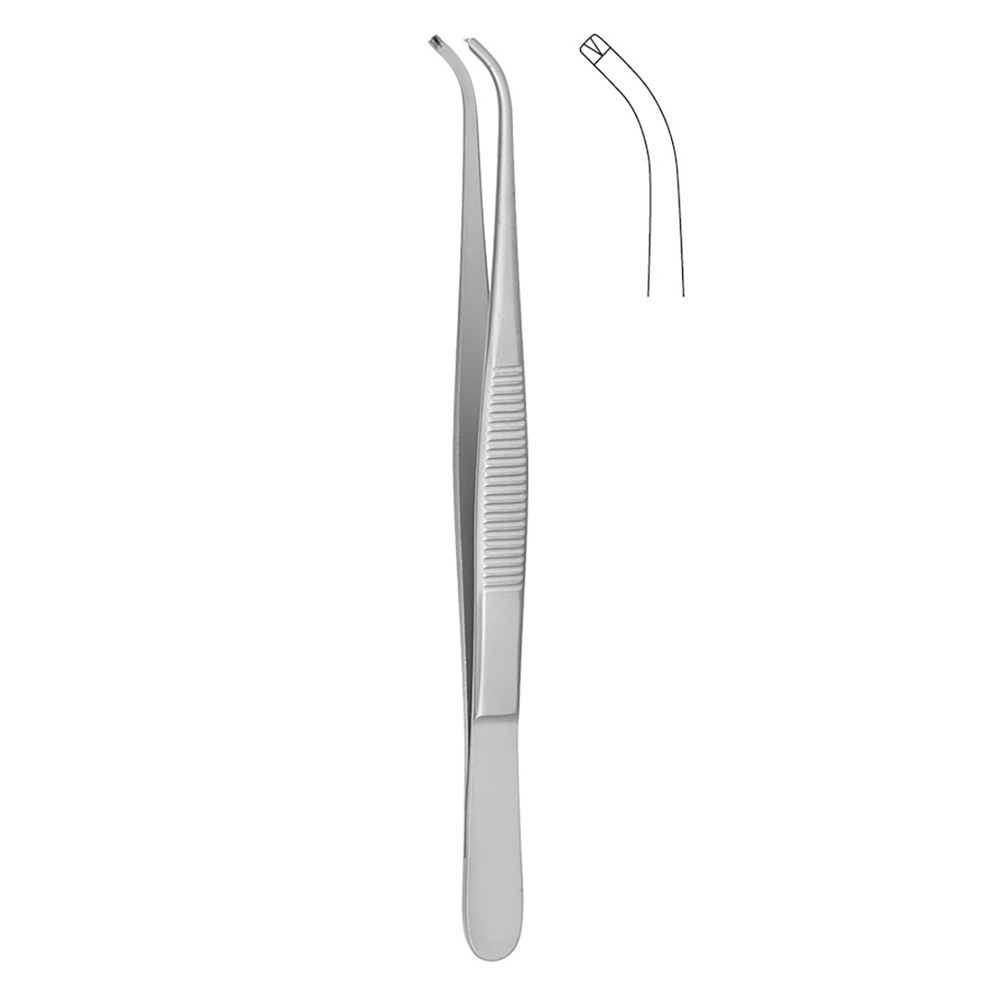


Dissecting Forceps (1 x 2 Teeth, Slim, Curved)
Dissecting Forceps (1 x 2 Teeth, Slim, Curved)
- Material Type:
- Crafted from high-quality surgical stainless steel, ensuring durability, corrosion resistance, and long-lasting reliability for use in clinical and laboratory settings.
- Design:
- 1 x 2 Teeth: Features a configuration with one tooth on one tip and two teeth on the other, allowing for secure grasping and handling of tissues while minimizing slippage.
- Slim Profile: Designed with a slim profile for improved maneuverability in tight spaces, making it ideal for delicate procedures.
- Curved Tips: Curved design enhances accessibility and control, allowing for precise manipulation of anatomical structures.
- Dimensions:
- Typically available in various lengths, commonly around 12 to 15 cm, suitable for a wide range of surgical and dissection tasks.
- Weight:
- Lightweight construction facilitates easy handling, reducing hand fatigue during prolonged use.
- Ergonomics:
- Ergonomically designed handle for a comfortable grip and enhanced control, improving user dexterity during procedures.
- Care Instructions:
- Autoclavable for easy cleaning and sterilization, ensuring compliance with strict safety and hygiene standards.
- Benefits:
- Ideal for use in dissection, surgical applications, and tissue handling, providing reliable and efficient grasping of delicate materials.
Reviews (0)
Shipping & Delivery
Related products


Cotton swab forceps , Sponge forceps, acc. to Rampley, straight
Straight Cotton Swab Forceps
- Material:
- High-quality stainless steel, ensuring durability and resistance to corrosion
- Design:
- Straight tips for easy access and manipulation
- Serrated jaws for a secure grip on cotton swabs or gauze
- Function:
- Used for handling cotton swabs, applying antiseptics, or manipulating soft tissue
- Length:
- Typically ranges from 10 cm to 15 cm
- Finish:
- Smooth or satin finish to reduce tissue adherence and enhance grip
Straight Sponge Forceps
- Material:
- Stainless steel, designed for strength and longevity
- Design:
- Straight configuration with broad, rounded tips to hold sponges securely
- Often features a locking mechanism for added security during use
- Function:
- Primarily used for grasping and holding sponges during surgical procedures or for cleaning wounds
- Length:
- Generally around 15 cm to 25 cm
- Finish:
- Polished or satin finish for improved visibility and handling

Cotton swab forceps , forceps, acc. to Foerster, smooth, curved
Curved Cotton Swab Forceps
- Material:
- High-quality stainless steel for durability and corrosion resistance
- Design:
- Curved tips to enhance visibility and access in confined areas
- Smooth jaws for gentle handling of cotton swabs or gauze
- Function:
- Ideal for manipulating cotton swabs during procedures, applying antiseptics, or handling delicate tissues
- Length:
- Typically ranges from 15 cm to 20 cm
- Finish:
- Polished or smooth finish to minimize tissue adherence and ensure gentle contact
Curved Forceps
- Material:
- Stainless steel, designed for strength and resistance to repeated sterilization
- Design:
- Curved configuration to facilitate access in deeper or restricted areas
- Smooth jaws to reduce trauma to tissue during manipulation
- Function:
- Used for grasping, holding, or manipulating tissue in various surgical procedures
- Length:
- Generally around 15 cm to 25 cm
- Finish:
- Polished or smooth finish for optimal handling and visibility during use


Trocars, suction tubes, Cannulas , Tube connector, only for 009-0545-00
Trocars
- Material: Typically constructed from stainless steel for durability and resistance to corrosion.
- Design:
- Features a sharp, pointed tip for easy penetration through tissues.
- Hollow shaft designed to allow the passage of other instruments or to provide drainage.
- Function:
- Used in minimally invasive procedures, such as laparoscopic surgeries, to create access points for other surgical instruments.
- Sizes: Available in various diameters to accommodate different surgical applications.
Suction Tubes
- Material: Usually made from medical-grade plastic or stainless steel.
- Design:
- Can be either flexible or rigid, available in various lengths and diameters.
- Often features openings along the sides or at the tip for efficient suctioning.
- Function:
- Utilized to remove fluids, debris, or gases from surgical sites or body cavities.
- Applications: Commonly employed in surgeries, wound care, and emergency procedures.
Cannulas
- Material: Often made from stainless steel or high-quality plastic.
- Design:
- Hollow tubes designed for insertion into the body.
- May have a removable inner stylet for easier insertion.
- Function:
- Used for delivering fluids, medications, or draining fluids from the body.
- Applicable in a variety of medical procedures, including IV therapy and airway management.
Tube Connector (Part Number 009-0545-00)
- Material: Typically made from medical-grade plastic or other non-toxic materials.
- Design:
- Designed to connect two tubes securely, often featuring a Luer-Lock mechanism for a tight, leak-proof connection.
- Function:
- Provides a reliable connection between different medical devices or tubes, ensuring the safe transfer of fluids.
- Applications: Used in various medical and surgical settings where fluid transfer or drainage is required, compatible with a variety of suction tubes and cannulas.

Cotton swab forceps , forceps, acc. to Foerster, serrated, straight
Straight Cotton Swab Forceps
- Material:
- High-quality stainless steel for durability and corrosion resistance
- Design:
- Straight tips for easy access and manipulation
- Serrated jaws to provide a secure grip on cotton swabs or gauze
- Function:
- Ideal for handling cotton swabs, applying antiseptics, or manipulating soft tissue during procedures
- Length:
- Typically ranges from 10 cm to 15 cm
- Finish:
- Smooth or satin finish to minimize tissue adherence and enhance handling
Serrated Straight Forceps
- Material:
- Stainless steel, designed for strength and long-term use
- Design:
- Straight configuration with serrated jaws for secure grasping of various materials
- Function:
- Used for grasping, holding, or manipulating tissue and other materials in surgical procedures
- Length:
- Generally around 12 cm to 20 cm
- Finish:
- Polished or satin finish for improved visibility and ease of handling

Cotton swab forceps , forceps, acc. to Foerster, slim, straight
Straight Cotton Swab Forceps
- Material:
- High-quality stainless steel for durability and corrosion resistance
- Design:
- Straight tips to enhance visibility and access in confined areas
- Smooth jaws for gentle handling of cotton swabs or gauze
- Function:
- Ideal for manipulating cotton swabs during procedures, applying antiseptics, or handling delicate tissues
- Length:
- Typically ranges from 15 cm to 20 cm
- Finish:
- Polished or smooth finish to minimize tissue adherence and ensure gentle contact
Straight Forceps
- Material:
- Stainless steel, designed for strength and resistance to repeated sterilization
- Design:
- Straight configuration to facilitate access in deeper or restricted areas
- Smooth jaws to reduce trauma to tissue during manipulation
- Function:
- Used for grasping, holding, or manipulating tissue in various surgical procedures
- Length:
- Generally around 15 cm to 25 cm
- Finish:
- Polished or smooth finish for optimal handling and visibility during use

Asepsis , Face protector, Martin complete
Asepsis and Face Protector According to Martin
Asepsis
- Definition: Asepsis refers to the set of techniques and practices aimed at preventing infection by eliminating or controlling pathogenic microorganisms. It is critical in medical and surgical environments to maintain a sterile field.
Face Protector (Complete) According to Martin
- Description:
- Design: A complete face protector typically covers the entire face, including the eyes, nose, and mouth, providing comprehensive protection against splashes, sprays, and airborne pathogens.
- Material: Often made from high-quality transparent plastic or polycarbonate for visibility and durability.
- Fit: Adjustable straps ensure a secure and comfortable fit for different face shapes and sizes.
- Function:
- Protection: Shields the face from biological hazards, chemicals, and infectious agents, especially during procedures that generate droplets or aerosols.
- Aseptic Technique: Maintains aseptic conditions by providing a barrier that prevents direct contact with potential contaminants.
- Usage:
- Surgical Procedures: Essential in operating rooms where exposure to blood and other bodily fluids is possible.
- Infection Control: Used in environments like emergency rooms, laboratories, and during the treatment of infectious diseases.
- Best Practices:
- Cleaning and Disinfection: Regularly clean and disinfect the face protector according to manufacturer guidelines, especially if it is reusable.
- Inspection: Before each use, inspect for damage or wear to ensure optimal protection.
- Storage: Store in a clean, dry place to prevent contamination when not in use.
Reviews
There are no reviews yet.