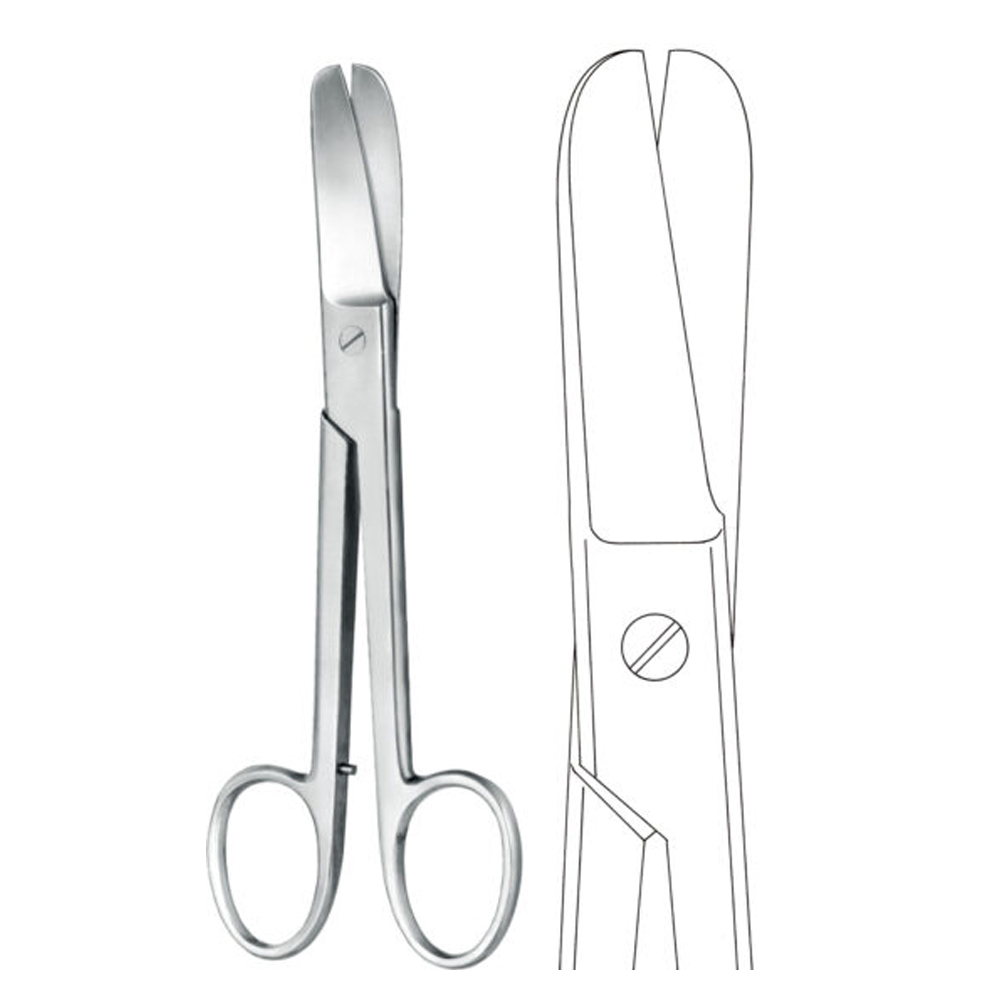
Lorenz Curved Bandage Scissors
- Design: Curved blade design that enhances visibility and control when cutting, particularly in tight or awkward spaces.
- Material: Made from high-quality stainless steel for durability and resistance to corrosion.
- Finish: Typically features a polished or satin finish for easy cleaning and maintenance.
- Blades: Sharp, curved blades designed for precise cutting of bandages and dressings, minimizing the risk of fraying.
- Size Options: Available in various lengths to accommodate different surgical and medical needs.
- Grip: Ergonomically designed handles for comfort and stability, allowing for better control during use.
- Safety Features: Blunt tips to enhance safety when cutting near the skin and sensitive areas, reducing the risk of injury.
- Applications: Ideal for use in medical, surgical, and emergency settings, providing reliable performance for cutting various types of bandages.
If you need further details or specific information, feel free to ask!
Categories: Dressing, Surgical Instruments
Related products
Asepsis , Fingernail file
Asepsis and Fingernail Files
Asepsis
- Definition: Asepsis refers to the practices designed to prevent the introduction of harmful pathogens into a sterile environment. This is crucial in medical and surgical settings to minimize the risk of infection.
Fingernail Files
- Use in Asepsis:
- Personal Hygiene: Maintaining clean fingernails is important in healthcare settings. Dirt or debris under nails can harbor bacteria, increasing the risk of contamination during procedures.
- Material: Fingernail files can be made of various materials, including emery board, glass, or metal. For aseptic conditions, tools should be cleaned or sterilized regularly.
- Design: Some nail files are designed to be disposable, reducing the risk of cross-contamination.
Best Practices
- Before Procedures:
- Ensure nails are clean and trimmed to prevent the accumulation of pathogens.
- Use an appropriate nail file that can be easily disinfected or is disposable.
- Infection Control: Regularly inspect and clean any reusable nail files to maintain aseptic conditions.
Cotton swab forceps , forceps, acc. to Foerster, smooth, curved
Curved Cotton Swab Forceps
- Material:
- High-quality stainless steel for durability and corrosion resistance
- Design:
- Curved tips to enhance visibility and access in confined areas
- Smooth jaws for gentle handling of cotton swabs or gauze
- Function:
- Ideal for manipulating cotton swabs during procedures, applying antiseptics, or handling delicate tissues
- Length:
- Typically ranges from 15 cm to 20 cm
- Finish:
- Polished or smooth finish to minimize tissue adherence and ensure gentle contact
Curved Forceps
- Material:
- Stainless steel, designed for strength and resistance to repeated sterilization
- Design:
- Curved configuration to facilitate access in deeper or restricted areas
- Smooth jaws to reduce trauma to tissue during manipulation
- Function:
- Used for grasping, holding, or manipulating tissue in various surgical procedures
- Length:
- Generally around 15 cm to 25 cm
- Finish:
- Polished or smooth finish for optimal handling and visibility during use
Asepsis , Fingernail file, hollow
Asepsis and Hollow Fingernail Files
Asepsis
- Definition: Asepsis refers to the methods used to prevent contamination by pathogens, ensuring a sterile environment, particularly in healthcare settings.
Hollow Fingernail Files
- Description:
- Design: Hollow fingernail files are typically designed with a hollow or tubular shape, which may allow for easier handling and lighter weight.
- Material: They can be made from various materials, including stainless steel, which is easy to sterilize.
Use in Asepsis
- Importance:
- Cleaning: Hollow designs can make it easier to clean and disinfect the file thoroughly, reducing the risk of harboring bacteria.
- Sterilization: Metal hollow files can be autoclaved or disinfected between uses, making them suitable for clinical environments where aseptic techniques are critical.
- Best Practices:
- Personal Hygiene: Regularly file nails to maintain cleanliness and prevent debris buildup.
- Before Procedures: Ensure that the hollow nail file is sterilized before use in a clinical setting.
- Storage: Store in a clean, dry place to avoid contamination.
Surgical Instruments
Trocars, suction tubes, Cannulas , Trocar, universal, set with 4 pieces
Trocars
- Material: Typically made from stainless steel for durability and resistance to corrosion.
- Design:
- Features a sharp, pointed tip for easy penetration of tissues.
- Hollow shaft allows for the passage of other instruments or for drainage purposes.
- Function:
- Used in minimally invasive surgeries (e.g., laparoscopic procedures) to create access points for additional instruments.
- Sizes: Available in various diameters to accommodate different surgical needs.
Suction Tubes
- Material: Usually made from medical-grade plastic or stainless steel.
- Design:
- Available in flexible or rigid forms, with various lengths and diameters.
- Often features openings along the sides or at the tip for effective suctioning.
- Function:
- Designed to remove fluids, debris, or gases from surgical sites or body cavities.
- Applications: Commonly used in surgeries, wound care, and emergency medicine.
Cannulas
- Material: Typically constructed from stainless steel or high-quality plastic.
- Design:
- Hollow tubes designed for insertion into the body.
- May include a removable inner stylet to facilitate insertion.
- Function:
- Used for delivering fluids, medications, or draining fluids from the body.
- Applicable in various medical procedures, including intravenous (IV) therapy and airway management.
Universal Trocar Set (4 Pieces)
- Composition:
- The set usually includes four different sizes of trocars, allowing for versatility in various surgical procedures.
- Material: Made from high-quality stainless steel, ensuring strength and durability.
- Design Features:
- Each trocar has a sharp point for easy penetration and a hollow shaft for instrument passage.
- The varying sizes cater to different surgical applications and patient needs.
- Function:
- Facilitates access to the abdominal or pelvic cavities in laparoscopic surgeries.
- Allows the introduction of other surgical instruments for various procedures.
Cotton swab forceps , forceps, acc. to Foerster, slim, straight
Straight Cotton Swab Forceps
- Material:
- High-quality stainless steel for durability and corrosion resistance
- Design:
- Straight tips to enhance visibility and access in confined areas
- Smooth jaws for gentle handling of cotton swabs or gauze
- Function:
- Ideal for manipulating cotton swabs during procedures, applying antiseptics, or handling delicate tissues
- Length:
- Typically ranges from 15 cm to 20 cm
- Finish:
- Polished or smooth finish to minimize tissue adherence and ensure gentle contact
Straight Forceps
- Material:
- Stainless steel, designed for strength and resistance to repeated sterilization
- Design:
- Straight configuration to facilitate access in deeper or restricted areas
- Smooth jaws to reduce trauma to tissue during manipulation
- Function:
- Used for grasping, holding, or manipulating tissue in various surgical procedures
- Length:
- Generally around 15 cm to 25 cm
- Finish:
- Polished or smooth finish for optimal handling and visibility during use
Trocars, suction tubes, Cannulas , Tube connector, Luer-Lock, female
Trocars
- Material: Typically constructed from stainless steel for durability and corrosion resistance.
- Design:
- Features a sharp, pointed tip for easy tissue penetration.
- Hollow shaft allows for the passage of other instruments or fluids.
- Function:
- Used in minimally invasive surgeries (e.g., laparoscopy) to create access points for surgical instruments.
- Sizes: Available in various diameters to accommodate different surgical applications.
Suction Tubes
- Material: Usually made from medical-grade plastic or stainless steel.
- Design:
- Can be flexible or rigid, with varying lengths and diameters.
- Often features openings along the sides or at the tip for effective suctioning.
- Function:
- Designed to remove fluids, debris, or gases from surgical sites or body cavities.
- Applications: Commonly used in surgical procedures, wound care, and emergency medicine.
Cannulas
- Material: Often made from stainless steel or high-quality plastic.
- Design:
- Hollow tubes designed for insertion into the body.
- May include a removable inner stylet for easier insertion.
- Function:
- Used for delivering fluids, medications, or draining fluids from the body.
- Applicable in various medical procedures, including intravenous (IV) therapy and airway management.
Female Luer-Lock Tube Connector
- Material: Typically made from medical-grade plastic.
- Design:
- Features a female Luer-Lock fitting for secure connection to Luer-tipped devices or syringes.
- Ensures a leak-proof connection, preventing backflow and contamination.
- Function:
- Used to connect two tubes or medical devices, facilitating fluid transfer in a controlled manner.
- Applications: Commonly employed in various medical and surgical settings where secure connections are required, such as in IV therapy or suction systems.
Asepsis , Face protector, Martin complete
Asepsis and Face Protector According to Martin
Asepsis
- Definition: Asepsis refers to the set of techniques and practices aimed at preventing infection by eliminating or controlling pathogenic microorganisms. It is critical in medical and surgical environments to maintain a sterile field.
Face Protector (Complete) According to Martin
- Description:
- Design: A complete face protector typically covers the entire face, including the eyes, nose, and mouth, providing comprehensive protection against splashes, sprays, and airborne pathogens.
- Material: Often made from high-quality transparent plastic or polycarbonate for visibility and durability.
- Fit: Adjustable straps ensure a secure and comfortable fit for different face shapes and sizes.
- Function:
- Protection: Shields the face from biological hazards, chemicals, and infectious agents, especially during procedures that generate droplets or aerosols.
- Aseptic Technique: Maintains aseptic conditions by providing a barrier that prevents direct contact with potential contaminants.
- Usage:
- Surgical Procedures: Essential in operating rooms where exposure to blood and other bodily fluids is possible.
- Infection Control: Used in environments like emergency rooms, laboratories, and during the treatment of infectious diseases.
- Best Practices:
- Cleaning and Disinfection: Regularly clean and disinfect the face protector according to manufacturer guidelines, especially if it is reusable.
- Inspection: Before each use, inspect for damage or wear to ensure optimal protection.
- Storage: Store in a clean, dry place to prevent contamination when not in use.

Reviews
There are no reviews yet.