Showing 145–156 of 1056 results

Bone surgery , Bone file, cross serration

Cross-Serrated Bone File

  • Purpose: Designed for shaping and smoothing bone surfaces while providing an effective grip on hard tissue.
  • Design:
    • Features a flat, elongated body with cross-serrated edges to enhance cutting efficiency.
    • Typically equipped with a handle for improved control during use.
  • Material:
    • Made from high-quality stainless steel or carbon steel for strength and durability.
    • Often has a polished finish for ease of cleaning and resistance to corrosion.
  • Size:
    • Available in various lengths and widths to suit different surgical applications and preferences.
  • Surface:
    • The cross-serration pattern increases the surface area for filing, allowing for effective removal of bone material while minimizing debris.
  • Applications:
    • Commonly used in orthopedic surgeries, particularly for shaping and refining bone edges during procedures like osteotomies or fracture repairs.
  • Variations:
    • May come in different shapes (e.g., curved or angled) to accommodate various surgical approaches and anatomical areas.

Bone surgery , Bone file, flat

Flat Bone File

  • Purpose: Used to smooth and contour bone surfaces during surgical procedures.
  • Design:
    • Flat, elongated shape with a straight edge for precise filing.
    • Usually features a handle for easy maneuvering and control.
  • Material:
    • Typically made from stainless steel or high-carbon steel for durability and strength.
    • May have a textured or coarse surface to enhance the filing process.
  • Size:
    • Available in various lengths and widths to accommodate different surgical needs.
  • Surface:
    • One or both sides may have a rough texture (coarse) for aggressive filing, while other sides may be smoother for finer finishing.
  • Applications:
    • Commonly used in orthopedic and reconstructive surgeries to refine bone edges and promote proper healing.
  • Variations:
    • May come in different shapes (e.g., curved or angled) for specific applications and access to various anatomical sites.

Bone surgery , Bone holding forceps, acc. to acc. to Lane, without lock

one Holding Forceps (Lane, Non-Locking)

  • Purpose: Used to securely hold and stabilize bone fragments during surgical procedures.
  • Design:
    • Characterized by a simple, scissor-like structure for easy handling.
    • Features broad, flat jaws that provide a stable grip on bone surfaces.
  • Material:
    • Typically made from high-quality stainless steel for strength and corrosion resistance.
    • Polished finish for easy cleaning and maintenance.
  • Size:
    • Available in various lengths and jaw widths to suit different surgical requirements.
  • Mechanism:
    • Non-locking design allows for manual control of grip strength; the surgeon maintains pressure to hold the bone in place.
  • Applications:
    • Widely used in orthopedic surgeries, particularly in fracture fixation and joint reconstruction.
  • Variations:
    • Comes in different configurations, including straight and curved options, to accommodate different surgical approaches.

Bone surgery , Bone holding forceps, acc. to Farabeuf

Bone Holding Forceps (Farabeuf)

  • Purpose: Designed to securely grasp and hold bone fragments during surgical procedures.
  • Design:
    • Typically features a scissor-like design for ease of use.
    • Includes serrated jaws for enhanced grip on bone surfaces.
  • Material:
    • Made from stainless steel for durability and resistance to corrosion.
    • May have a polished finish for smooth operation and easy cleaning.
  • Size:
    • Available in various sizes to accommodate different surgical needs and patient anatomies.
  • Mechanism:
    • Often equipped with a locking mechanism to maintain grip without continuous pressure from the surgeon.
  • Applications:
    • Commonly used in orthopedic surgeries, trauma procedures, and reconstructive surgeries.
  • Variations:
    • May come in different configurations, such as straight or curved jaws, depending on the surgical approach.

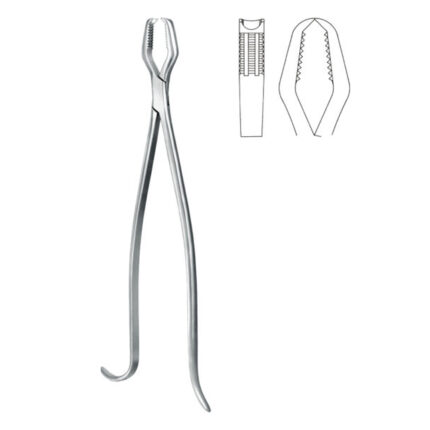
Bone surgery , Bone holding forceps, acc. to Langenbeck

Bone Holding Forceps (According to Langenbeck)

Description

  • Purpose: Bone holding forceps are specialized surgical instruments designed to grasp and stabilize bone fragments during orthopedic procedures, ensuring better control and visibility for the surgeon.

Design Features

  • Material: Typically made from high-quality stainless steel, offering strength, durability, and resistance to corrosion.
  • Shape: Often available in straight or curved designs, allowing for adaptability based on the surgical site and procedure.
  • Jaws:
    • The jaws are usually serrated or textured to provide a firm grip on bone surfaces, minimizing slippage.
    • Some models may have a locking mechanism that allows for secure holding without constant manual pressure, freeing the surgeon's hands for other tasks.
  • Handle: Designed for ergonomic use, ensuring comfort and control during prolonged surgical procedures.

Function

  • Bone Stabilization: Essential for holding bone fragments in position during fixation procedures, such as the insertion of plates, screws, or rods.
  • Alignment: Helps align and maintain proper positioning of bone fragments during fracture repair and reconstructive surgeries.
  • Visualization: Maintains an open surgical field, improving access and visibility for the surgeon.

Applications

  • Commonly used in various orthopedic and surgical procedures, including:
    • Fracture repairs
    • Osteotomies (cutting and repositioning of bones)
    • Joint reconstructions
    • Tumor resections

Conclusion

The Langenbeck bone holding forceps are crucial instruments in orthopedic surgery, providing reliable and secure handling of bone during critical surgical interventions. If you have any further questions or need additional information, feel free to ask!

Bone surgery , Bone holding forceps, acc. to UlriCh, curved

Bone Holding Forceps (Curved, According to Ulrich)

Description

  • Purpose: Bone holding forceps are specialized surgical instruments designed to securely grasp and hold bone fragments during orthopedic procedures, allowing for improved visualization and manipulation of the surgical site.

Design Features

  • Material: Typically constructed from high-quality stainless steel, providing strength, durability, and resistance to corrosion.
  • Shape: The curved design allows for better access to anatomical structures and facilitates gripping in areas that may be difficult to reach with straight instruments.
  • Jaws:
    • The jaws are often serrated or have a textured surface, enhancing grip on the bone and preventing slippage during surgical maneuvers.
    • Some models may include a locking mechanism to maintain a secure hold without requiring continuous manual pressure.
  • Handle: Ergonomically designed handles ensure comfort and control, allowing the surgeon to apply the necessary force with precision and ease.

Function

  • Bone Stabilization: Used to hold bone fragments in place during fixation procedures, such as the placement of plates, screws, or other fixation devices.
  • Alignment: Assists in aligning bone fragments during fracture repairs or reconstructive surgeries.
  • Visualization: Keeps the surgical site open and stable, providing better access and visibility for the surgeon.

Applications

  • Commonly utilized in various orthopedic procedures, including:
    • Fracture repairs
    • Osteotomies (bone cutting and repositioning)
    • Joint reconstructions
    • Tumor resections

Conclusion

The Ulrich curved bone holding forceps are essential tools in orthopedic surgery, enhancing the surgeon's ability to securely handle and stabilize bone during critical procedures. If you have any further questions or need additional information, feel free to ask!

Bone surgery , Bone holding forceps, acc. to UlriCh, straight

Bone Holding Forceps (Straight, According to Ulrich)

Description

  • Purpose: Bone holding forceps are specialized surgical instruments designed to securely grasp and hold bone fragments during orthopedic procedures, allowing for better visualization and manipulation of the surgical site.

Design Features

  • Material: Typically made from high-quality stainless steel for strength, durability, and resistance to corrosion.
  • Shape: The straight design provides easy access to various anatomical locations, enabling effective gripping of bone without obstruction.
  • Jaws:
    • The jaws are often serrated or have a textured surface to enhance grip on the bone, preventing slippage during surgery.
    • Some models may feature a locking mechanism to maintain a secure hold without continuous manual pressure.
  • Handle: Ergonomically designed handles ensure comfort and control, allowing the surgeon to apply the necessary force with precision.

Function

  • Bone Stabilization: Used to hold bone fragments in place during fixation procedures, such as during the placement of plates, screws, or other fixation devices.
  • Visualization: Keeps the surgical site open and stable, providing better access and visibility for the surgeon.
  • Alignment: Assists in aligning bone fragments during fracture repair or reconstructive surgeries.

Applications

  • Commonly utilized in various orthopedic procedures, including:
    • Fracture repairs
    • Osteotomies (bone cutting and repositioning)
    • Joint reconstructions
    • Tumor resections

Conclusion

The Ulrich straight bone holding forceps are vital tools in orthopedic surgery, facilitating the secure handling and stabilization of bone during critical procedures. If you have any further questions or need additional details, feel free to ask!

Bone surgery , Bone rasp, acc. to Putti, flat

Bone Rasp (Flat, According to Putti)

Description

  • Purpose: A bone rasp is a surgical instrument used to smooth and shape bone surfaces during orthopedic procedures. It helps prepare bone for implants or grafts and can also be used to remove irregularities.

Design Features

  • Material: Typically constructed from high-grade stainless steel to ensure durability, corrosion resistance, and ease of sterilization.
  • Shape: The flat design of the rasp allows for effective surface smoothing and contouring of flat bone surfaces, making it ideal for various orthopedic applications.
  • Surface: The working surface of the rasp is finely serrated or textured to enhance its ability to cut and smooth bone tissue with minimal effort.
  • Handle: Usually features an ergonomic handle for a secure grip and better control during use, allowing the surgeon to apply the necessary pressure without discomfort.

Function

  • Bone Shaping: Used to refine and contour bone surfaces, especially in procedures involving joint replacements or reconstructions.
  • Debridement: Effective for removing rough edges or irregularities in bone, ensuring a smoother surface for better healing and integration with implants.
  • Preparation for Implants: Prepares the bone bed for the placement of screws, plates, or other fixation devices, enhancing stability and integration.

Applications

  • Commonly utilized in a variety of orthopedic surgeries, including:
    • Joint arthroplasties (hip, knee)
    • Fracture repairs
    • Osteotomies (cutting and repositioning bones)
    • Tumor resections

Conclusion

The Putti flat bone rasp is an essential tool in orthopedic surgery, facilitating precise bone shaping and preparation for optimal surgical outcomes. If you have any further questions or need additional information, feel free to ask!

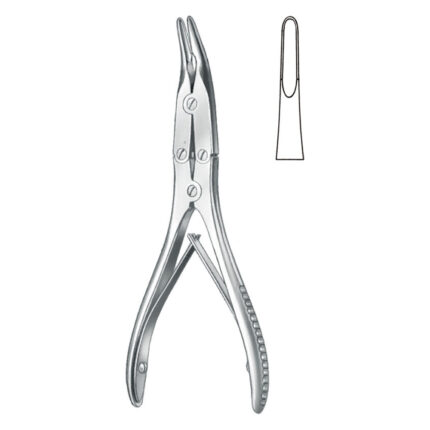
Bone surgery , Bone rongeur, acc. to Boehler, straight

Bone Rongeur (Straight, According to Boehler)

Description

  • Purpose: A bone rongeur is a surgical instrument used to remove or nibble away bone tissue. It is particularly useful in orthopedic and neurosurgical procedures where precise bone removal is required.

Design Features

  • Material: Typically made from high-quality stainless steel for strength, durability, and resistance to corrosion.
  • Shape: The straight design allows for easy access to flat surfaces of bone during surgery.
  • Jaws: The rongeur features sharp, concave jaws that can grip and cut bone effectively. The edges are designed to provide a clean bite, facilitating precise removal of bone fragments.
  • Handle: Ergonomically designed handles ensure a secure grip and optimal control during use, reducing hand fatigue for the surgeon.

Function

  • Bone Removal: Used to remove small pieces of bone or to create a cavity in bone during procedures such as spinal surgery, joint replacement, or tumor resection.
  • Debridement: Effective for debriding necrotic or unhealthy bone tissue to promote healing.

Applications

  • Commonly utilized in various orthopedic surgeries, including:
    • Spinal surgeries (e.g., laminectomy, discectomy)
    • Tumor resections
    • Joint surgeries (e.g., hip and knee arthroplasties)
    • Fracture repairs

Conclusion

The Boehler straight bone rongeur is a vital tool in orthopedic surgery, providing surgeons with the ability to perform precise bone removal and manipulation. If you have any further questions or need additional details, feel free to ask!

Bone surgery ,23-934-14-07

Material;

  • Type: Surgical implant for bone repair
  • Material Composition: Biocompatible titanium alloy
  • Weight: Lightweight design for ease of use
  • Surface Treatment: Coated with bioactive material to enhance osseointegration
  • Dimensions: Available in multiple sizes for various surgical needs
  • Mechanical Properties:
    • High tensile strength
    • Excellent fatigue resistance
  • Radiopacity: Visible under X-ray for easy monitoring
  • Sterilization Method: Ethylene oxide or gamma radiation
  • Packaging: Individually packaged in sterile conditions
  • Regulatory Compliance: CE marked and FDA approved
Let me know if you need more details or specific information!

Bracket Holer (Tweezer Cur)

Curved Bracket Holder (Tweezers)

  • Precision Tool: Specifically designed for the accurate placement and positioning of orthodontic brackets, ensuring optimal alignment during bonding.
  • Curved Tip Design: The ergonomic, curved tips provide enhanced access to different angles in the oral cavity, facilitating easier handling of brackets.
  • Durable Construction: Made from high-quality stainless steel, ensuring strength, durability, and resistance to corrosion for repeated clinical use.
  • Ergonomic Handle: Features a comfortable grip that enhances control and reduces hand fatigue during prolonged procedures.
  • Versatile Application: Ideal for placing various types of brackets, making it a valuable tool in orthodontic practices.
  • Lightweight and Balanced: Promotes easy maneuverability, allowing for precise adjustments in tight spaces.
  • Autoclavable: Safe for sterilization, adhering to infection control protocols to ensure patient safety and hygiene.
The Curved Bracket Holder (Tweezers) is an essential instrument for orthodontic professionals, improving the efficiency and accuracy of bracket placement during treatments.