


Lingual Hammerhead NiTi Bender (Serrated)
-
Design: Expertly engineered with a specialized "Hammerhead" double-sided tip design, specifically optimized for the unique geometry and restricted space of lingual orthodontic treatments.
-
Material: Forged from high-grade, surgical-grade stainless steel with reinforced joints to provide maximum structural integrity and high resistance to repeated autoclave cycles.
-
Beaks: Features precision-milled serrated internal surfaces that provide an ultra-secure, non-slip grip on slick NiTi wires, allowing for consistent and predictable bends without wire distortion.
-
Grip: Designed with slim, ergonomically contoured handles to ensure superior control and a clear line of sight when working on the lingual (tongue-side) surfaces of the teeth.
-
Applications: Primarily used for creating precise "step" bends and cinching the distal ends of Nickel-Titanium (NiTi) archwires in lingual appliances, ensuring the wire is safely and comfortably secured.

Lister Bandage


Lister TC Bandage Scissors
Lister TC Bandage Scissors
- Design: Designed for cutting bandages, dressings, and other materials with precision and ease.
- Material: Made from high-quality stainless steel with tungsten carbide (TC) inserts for enhanced cutting performance and durability.
- Finish: Typically features a satin or polished finish for ease of cleaning and improved grip.
- Blades: Equipped with sharp, beveled blades that provide clean cuts, ideal for various bandaging materials.
- Size Options: Available in multiple lengths, commonly ranging from 5" to 7" to suit different cutting needs.
- Grip: Ergonomically designed handles that offer comfort and stability, reducing hand fatigue during use.
- Safety Features: Blunt tip design to prevent accidental injury while cutting near the skin or sensitive areas.
- Applications: Widely used in medical, surgical, and emergency settings for cutting bandages, dressings, and other textile materials.

Littauer Straight Ligature Scissors
Littauer Straight Ligature Scissors
- Design: Straight blade design specifically crafted for cutting ligatures and sutures with precision.
- Material: Made from high-quality stainless steel for durability and resistance to corrosion.
- Finish: Typically features a polished or satin finish for easy cleaning and a professional appearance.
- Blades: Sharp blades designed to provide clean cuts, minimizing tissue trauma and ensuring effective performance.
- Size Options: Generally available in various lengths to accommodate different surgical needs.
- Grip: Ergonomically designed handles that offer comfort and stability, reducing hand fatigue during prolonged use.
- Applications: Commonly used in surgical settings for cutting sutures and ligatures, making it an essential tool for surgeons.
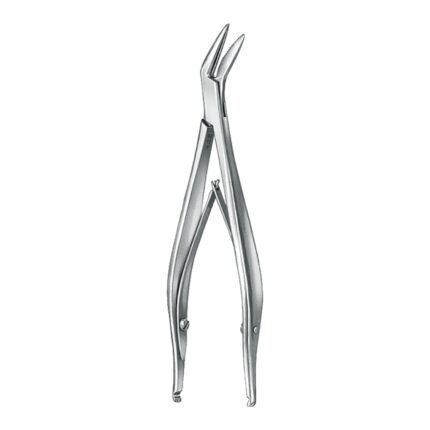
Long Michel Clip Applying Forceps
Long Michel Clip Applying Forceps
- Design: Extended length design for improved reach and access in deeper surgical sites, facilitating clip application in tight spaces.
- Material: Made from high-quality stainless steel for durability and resistance to corrosion.
- Finish: Typically features a satin or polished finish for enhanced grip and ease of handling.
- Size Options: Generally available in longer lengths, often around 8" to 10", suitable for various surgical applications.
- Jaws: Specialized jaws designed to securely grasp and apply surgical clips without damaging them.
- Grip: Ergonomically designed handles for comfort and stability, allowing for precise manipulation during procedures.
- Locking Mechanism: Often includes a reliable locking mechanism to maintain secure closure during use, ensuring accurate clip application.
- Applications: Ideal for use in a variety of surgical procedures, particularly in vascular, gastrointestinal, and laparoscopic surgeries, where extended reach and precision are essential.


Lower Incisors
Lower Incisors
Description:- Lower incisors refer to the front teeth located in the lower jaw (mandible), specifically the two central incisors and the two lateral incisors. They play a critical role in biting and cutting food.
- Number: There are four lower incisors—two central incisors and two lateral incisors.
- Shape: These teeth have a thin, flat shape with a sharp edge designed for slicing food.
- Size: Central incisors are usually larger than lateral incisors.
- Enamel: The outer layer that protects the tooth.
- Dentin: The layer beneath the enamel that provides structure and support.
- Pulp Chamber: Contains the nerve and blood supply of the tooth.
- Biting: Lower incisors are primarily responsible for cutting food during the initial stages of chewing.
- Aesthetic Role: They contribute to the overall appearance of the smile and facial structure.
- Cavities: Lower incisors are susceptible to decay if proper oral hygiene is not maintained.
- Alignment Issues: Malocclusion or misalignment can occur, affecting bite and aesthetics.
- Restorative Needs: May require treatments such as fillings, crowns, or orthodontic interventions if damaged or misaligned.
- Regular brushing, flossing, and dental check-ups are essential to maintain the health of lower incisors and prevent dental issues.

Lower Incisors
Lower Incisors
Description:- Lower incisors refer to the front teeth located in the lower jaw (mandible), specifically the two central incisors and the two lateral incisors. They play a critical role in biting and cutting food.
- Number: There are four lower incisors—two central incisors and two lateral incisors.
- Shape: These teeth have a thin, flat shape with a sharp edge designed for slicing food.
- Size: Central incisors are usually larger than lateral incisors.
- Enamel: The outer layer that protects the tooth.
- Dentin: The layer beneath the enamel that provides structure and support.
- Pulp Chamber: Contains the nerve and blood supply of the tooth.
- Biting: Lower incisors are primarily responsible for cutting food during the initial stages of chewing.
- Aesthetic Role: They contribute to the overall appearance of the smile and facial structure.
- Cavities: Lower incisors are susceptible to decay if proper oral hygiene is not maintained.
- Alignment Issues: Malocclusion or misalignment can occur, affecting bite and aesthetics.
- Restorative Needs: May require treatments such as fillings, crowns, or orthodontic interventions if damaged or misaligned.
- Regular brushing, flossing, and dental check-ups are essential to maintain the health of lower incisors and prevent dental issues.


